
Luxury travel at 36.2% is no surprise.
Post-pandemic appetite for experience over ownership has been the dominant
luxury story for three years now, and there is very little to suggest that is
about to reverse.
The number worth looking at is at the
other end.
Leather goods. 4.5%.
A category that defined luxury for most
of the twentieth century — that built the mythology of the French maison, that
made a waiting list a status symbol before anyone had thought to apply the
concept to restaurants or limited-edition trainers — is now the smallest slice
of the luxury spending chart.
This is not a brand problem. It is a
positioning problem. And the distinction matters enormously
What the data is actually saying
Leather goods at 4.5% does not mean the
category is failing. The houses at the top of it — the ones with century-long
histories, the ones whose monograms are instantly recognisable from across a
departure lounge — are not struggling. They are printing money. What the data
is saying is that the category as a whole is not growing at the pace of the
sectors around it, and that the gap between the very top of the market and
everyone below it is widening in ways that make the aggregate number
misleading.
The real story is beneath the 4.5%
It is the mid-tier leather goods brands —
the ones who are too established to be considered emerging and too small to
compete on heritage with the category leaders — who are experiencing the most
significant pressure. They occupy a positioning no-man's land: not experiential
enough to compete with luxury travel, not personalised enough to compete with
fine jewellery, not culturally agile enough to compete with beauty, and not
prestigious enough to command the price points that make the economics of
craft-led leather production viable.
They have, in many cases, the product.
What they lack is the story — and specifically, the story told in a way that
makes a 2026 luxury consumer understand why they should choose ownership over
experience.
Why experience is winning and what
leather goods can learn from it
Luxury travel accounts for more than a
third of luxury spending because it has successfully repositioned itself not as
the purchase of a service but as the acquisition of a self — a version of the
buyer that exists only in that place, at that time, for those few days. The
hotel is not selling a room. It is selling a moment of becoming.
Beauty has done something similar. The
best luxury beauty brands are not selling skincare. They are selling a ritual,
a daily practice, a private relationship with oneself that happens in fifteen
minutes every morning before the rest of the world has access to you.
The leather goods category, at its most
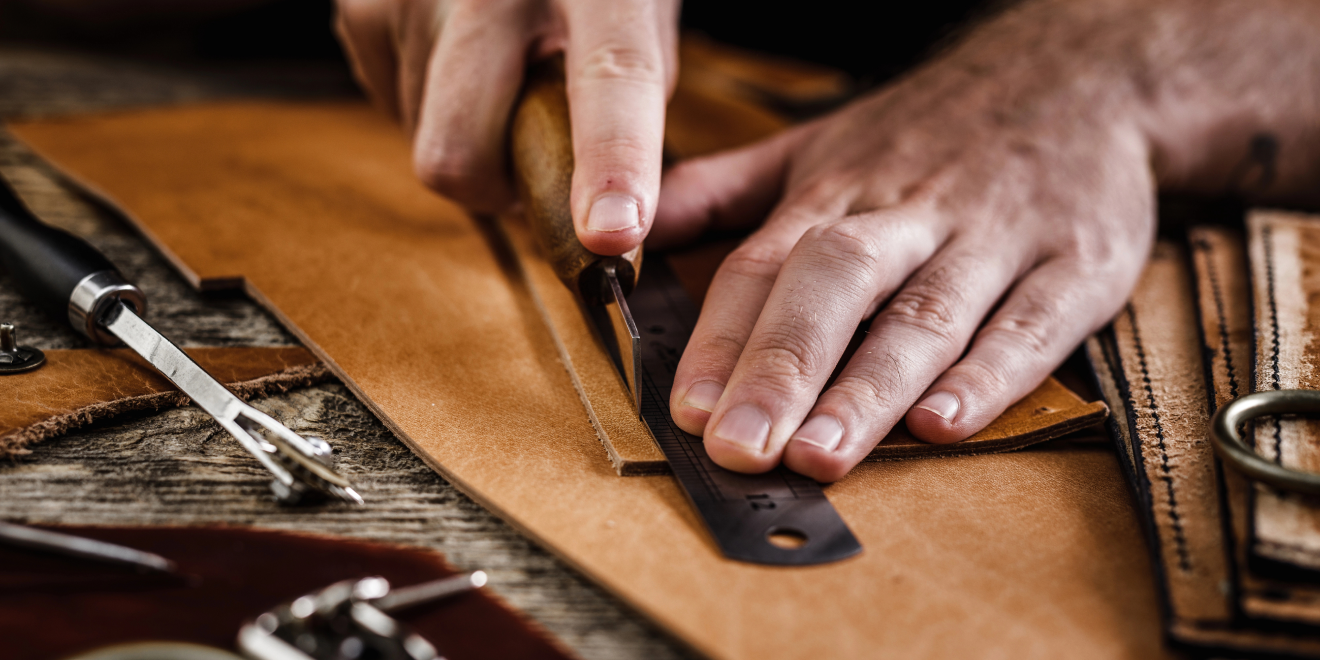
compelling, has always had this capability. A bag that is made to last decades,
that develops a patina that is entirely specific to its owner, that carries the
physical evidence of everywhere it has been — this is not a product. It is a
companion. The best leather goods brands know this. Most of them have simply
forgotten how to say it in a way that a 2026 buyer finds relevant.
What it would take to buck the trend
Three things — and none of them are a new
campaign.
Reframe ownership as the experience.
The luxury travel category wins because it sells
transformation. The leather goods category needs to make the same argument
about a different kind of transformation — one that happens not in four days
but over four decades. The bag that looks better at fifty than it did at
thirty. The wallet that carries the invisible history of every room it has been
in. Experience and ownership are not opposites. The best leather goods are the
most durable form of experiential luxury that exists. The category has not made
this case loudly or specifically enough.
Earn the right to craft credibility. Beauty at 18.6% is winning in part because it has become
extraordinarily good at showing its work — the ingredients, the process, the
provenance, the specific expertise behind the formulation. Leather goods brands
that make things by hand, that source specifically, that have inherited
techniques from generations of craftspeople, are sitting on an enormous
credibility asset and largely keeping it to themselves. In 2026, showing the
work is not a nice-to-have. It is the argument.
Address the value gap directly. The 2026 luxury consumer — particularly the younger end of the market
that all luxury categories are competing for — holds sustainability, longevity,
and considers consumption as genuine values rather than marketing preferences.
A leather goods category that makes things to last is structurally better aligned
with those values than the fast-moving categories around it. Buy once. Buy
well. Keep it for thirty years. This is not an environmental argument. It is a
luxury argument. The category needs to make it in those terms.
The underdog advantage
There is something clarifying about 4.5%.
The category leaders in luxury travel,
beauty, and apparel are all navigating the particular pressures that come with
scale — defending market share, managing brand dilution, justifying price at
the very top of a market that is watching them closely. The leather goods
category, precisely because it is the smallest slice and under the most
scrutiny, faces a different set of conditions — and with them, a different kind
of opportunity.
The brands that will grow share in the 2026
luxury market are not the ones with the largest budgets or the longest
heritage. They are the ones that understand most precisely what they are for,
say it with the most clarity, and make the case — specifically, compellingly,
in language the 2026 buyer recognises as being directed at them — that
ownership and experience are not a choice.
That they are, in the right hands, the
same thing.
This is not a product problem. It is not
a design problem. It is not a campaign problem.
It is, as it almost always is, a
positioning problem.
And positioning problems, when the
underlying product is genuinely excellent, are among the most tractable
problems a brand can have.
The work is not making the leather goods
category relevant again. The work is finding the precise language for a truth
that has always been there — and saying it as if you mean it.


 LINKEDIN
 INSTAGRAM
 FACEBOOK
Thoughts
Your Response →